Today is the 158th anniversary of the First Battle of Bull Run, My2x great grandfather Asa Freeman Ellingwood was there and was injured in the retreat of the Union forces, and some years later he applied for a Civil War Disability Pension. I obtained a copy of his claim and blogged about it back in 2011, and thought I'd repost part ofnAsa's memories of his experience and injuries for this anniversary.
There are some parts that I wasn't able to make out and other words which are my best guesses
at meaning, The latter are indicated by (?). Other that that the grammar and
punctuation are as they appear on the original document.
Q: Where, when and how did you incur the two alleged ruptures.
A: While I was a member of Co.I 5th Me. at the first battle of Bull Run on the
21st of July 1861 I was helping a man by the name of Perry who died afterwards
off the field when the Col. Mark H. Dunnell who was riding by the side of us
swung his horse around and knocked me down with the man I was helping
on top of me. We were both knocked over. We were on the retreat from Bull
Run in the woods at the time and when I was knocked over I was knocked
over a log and it was at that time I was knocked down when I was ruptured
on both sides. The right side and the left side.
Q: Is this affidavit I now show you dated and executed Nov 12 th 1880 in
which you state that you received one rupture in 1861 and in in March of 1862
signed by you.
A: Yes sir it is
Q: How do you explain the discrepancy in prior(?) affidavit and your statement
of today.
A:They misunderstood me when they made the affidavit for I never knew that
I had stated any such thing for I never got any rupture in 1862. They were both
(illegible) me in 1861 just after2 injuries by the horse.
Q: Were you sent to Hospital at the time you say you were knocked down and run
over Col Mark Dunnell's horse.
A: No sir I was not in the Hospital at any time. We had no Hospital at that time.
Q: How long after you were run over or knocked down was it before you felt or
knew you were ruptured.
A: I felt it the same day
Q: Who knew of your rupture at the time.
A:I don't know that anyone did only I told Dr Warren and he gave me some
medicine and I reported as sick and they put me onto light duty.
Q: Where was you when Dr Warren treated you for the rupture and disease
of the kidneys.
A: It was at Bush Hill Va. in July 1861'
Q: When and or where did you contract the alleged disease of kidneys.
A: At the first battle of Bull Run in July 1861. We were on a double quick march
on the 20th of July and we had just got to Fairfax and I was very sweaty and
tired and we had no blankets having (illegible) away on our retreat.
(There seems to be a page missing here as the next page starts with Asa
answering a question about him reenlisting.)
A: Yes sir I reenlisted in the V.I.R. C. in September, 1864 and stayed there for
about 16 months
Q: Who knew that you were ruptured when you came home in December 1861
A: My wife and I don't know of anyone else
Q: What was your duties while you were in the V.R. Corps
A :I was a cook
Q: Where did you live in Dec 1861 when you came home from the 5th Maine
A: I lived at Paris Maine
Q: Who treated you when you came home in Dec 1861
A: Dr Russell who now lives at Fayette(?) Maine
Q: Where have you lived since you came out of the service in 1865
A: I lived in Dummer in N.H for some 6 years and Dr Meserve of Milan N.H.
then treated me. Then I moved across the lake to Erril N.H. where I lived some
three years. Dr. Wily of Bethel treated me while I lived at Erril. I then moved here
near Upton Hill where I have been ever since,
Q: Do you wish to act as your own attorney during this examination of your claim
or do you wish to appoint some attorney to act for you
A: I am poor and have not the money to (three illegible words) my self and cannot
afford to have anyone. Therefore I shall be obliged to depend upon your honesty.
Q: Then you waive all rights to be present in person or to be represented by an
attorney during said examination of your claims
A: Yes Sir I do.
Q: Who do you wish me to see in behalf of your claims
A: I wish you to see Crosby Curtis of Woodstock Maine also his wife. James
Barrows and Oliver Pratt of West Paris Me.and those who have testified in my
claim and Mr Bradford Denning at West Paris Maine.
Q: Have you any other testimony to offer in behalf of your claims other than that
which is already mentioned
A: No Sir
There follow the signatures of two witnesses, C.L. Abbott and A. F. Abbott.
Then the signature of Asa F Ellingwood as deponent.
Sworn to and subscribed before me this 3rd day of Apr 1884 and I
certify that the contents were fully made known to deponent before signing.
F. E. Lawton Special Examiner.
Showing posts with label Civil War. Show all posts
Showing posts with label Civil War. Show all posts
Sunday, July 21, 2019


Tuesday, May 19, 2015
THE FIFTH AMERICAN CIVIL WAR BLOGPOST CHALLENGE ROUNDUP
It's time for the blogposts roundup of the final American Civil War Blogpost Challenge.
There have been some great submissions with fascinating stories since I started the Challenge back in 2011. This year is no exception.
Here's this year's blogposts:
Many monuments were erected for the soldiers and slain after the Civil War ended. Today
you can find one in nearly every town in America. Dorene from Ohio shares the details of
the construction of one such monument along with an old newspaper clipping about the
unveiling ceremony in Civil War Soldiers Monument at Castalia Cemetery on her Graveyard
Rabbit of Sandusky Bay blog.
Cousin Pam Carter visited the site of the Battle of Antietam some years back. She tells
the story about the death there of a kinsman and his final message to his family, and
includes a photo of a famous battlefield landmark in Fatally Wounded at Antietam at
My Maine Ancestry
Janice M Sellers' 2x great grandfather Cornelius Godshalk Sellers enlisted in the Union
Army at age 18. Janice follows the paper trail to detail his service and his life after the
war's end in Cornelius Godshalk Sellers, My Civil War Ancestor at Ancestral Discoveries.
Heather Wilkinson Rojo and I are distant cousins many times over through a number of
shared ancestral lines, one of which is the Herrick family of Essex County, Ma. One of
our distant Herrick cousins has the dubious distinction of undergoing The First Amputation of the US Civil War. You can find it at her Nutfield Genealogy blog.
The town in Texas that Amanda the Librarian lives in was named after a Confederate
general, Hiram B. Granbury. Amanda talks about his career and includes some great
photos in the post Tombstone Tuesday: Confederate General Hiram B. Granbury at her
ABT UNK blog.
Civil War Pension files are a great source of information about an ancestor's military service
and in many cases what his life was like after the war. Many pension claims are not because
of gunshot wounds but of accidents and illnesses. Carol A. Bowen Stevens examines the
pension file and other records of on such claimant, her relative William M. Lashbrook, at her Reflections From the Fence blog in The Fifth American Civil War Blogpost Challenge :: William M. Lashbrook, Iowa
Finally, I recently discovered that two of my Barrows family kinsmen fought in the Battle of Gettysburg. The first is WILLIAM H.BARROWS, a cousin who came back to Massachusetts from Brooklyn, N.Y. to enlist in the Union Army and who died at Gettysburg. The second cousin. was from the branch of the family that had moved to Maine and enlisted in one of the most celebrated regiments in the Union Army. He survived some of the fiercest fighting at Gettysburg, and the rest of the War, but his life afterward seems troubled. His story is in ASA ALDEN BARROWS OF THE 20TH MAINE here on West in New England.
That concludes the fifth and final American Civil War Blogpost Challenge. Please visit and read the blogposts from this year's contributors, and leave them a comment if you can!
I want to thank everyone who has taken part in the Challenge over five years. I truly
appreciate all of you sharing part of your family history!
There have been some great submissions with fascinating stories since I started the Challenge back in 2011. This year is no exception.
Here's this year's blogposts:
Many monuments were erected for the soldiers and slain after the Civil War ended. Today
you can find one in nearly every town in America. Dorene from Ohio shares the details of
the construction of one such monument along with an old newspaper clipping about the
unveiling ceremony in Civil War Soldiers Monument at Castalia Cemetery on her Graveyard
Rabbit of Sandusky Bay blog.
Cousin Pam Carter visited the site of the Battle of Antietam some years back. She tells
the story about the death there of a kinsman and his final message to his family, and
includes a photo of a famous battlefield landmark in Fatally Wounded at Antietam at
My Maine Ancestry
Janice M Sellers' 2x great grandfather Cornelius Godshalk Sellers enlisted in the Union
Army at age 18. Janice follows the paper trail to detail his service and his life after the
war's end in Cornelius Godshalk Sellers, My Civil War Ancestor at Ancestral Discoveries.
Heather Wilkinson Rojo and I are distant cousins many times over through a number of
shared ancestral lines, one of which is the Herrick family of Essex County, Ma. One of
our distant Herrick cousins has the dubious distinction of undergoing The First Amputation of the US Civil War. You can find it at her Nutfield Genealogy blog.
The town in Texas that Amanda the Librarian lives in was named after a Confederate
general, Hiram B. Granbury. Amanda talks about his career and includes some great
photos in the post Tombstone Tuesday: Confederate General Hiram B. Granbury at her
ABT UNK blog.
Civil War Pension files are a great source of information about an ancestor's military service
and in many cases what his life was like after the war. Many pension claims are not because
of gunshot wounds but of accidents and illnesses. Carol A. Bowen Stevens examines the
pension file and other records of on such claimant, her relative William M. Lashbrook, at her Reflections From the Fence blog in The Fifth American Civil War Blogpost Challenge :: William M. Lashbrook, Iowa
Finally, I recently discovered that two of my Barrows family kinsmen fought in the Battle of Gettysburg. The first is WILLIAM H.BARROWS, a cousin who came back to Massachusetts from Brooklyn, N.Y. to enlist in the Union Army and who died at Gettysburg. The second cousin. was from the branch of the family that had moved to Maine and enlisted in one of the most celebrated regiments in the Union Army. He survived some of the fiercest fighting at Gettysburg, and the rest of the War, but his life afterward seems troubled. His story is in ASA ALDEN BARROWS OF THE 20TH MAINE here on West in New England.
That concludes the fifth and final American Civil War Blogpost Challenge. Please visit and read the blogposts from this year's contributors, and leave them a comment if you can!
I want to thank everyone who has taken part in the Challenge over five years. I truly
appreciate all of you sharing part of your family history!
Wednesday, May 13, 2015
ASA ALDEN BARROWS OF THE 20TH MAINE
The name Asa was popular in the Barrows branch of my family tree. I haven't done much
work on the collateral branches of that line but I already have four Asa Barrows in my
RootsMagic database. The first of them was my 4x great grandfather Asa Barrows, and
when his daughter Rachel married John Ellingwood, they named my 2x great grandfather Asa
Freeman Ellingwood. A few years ago I blogged about Asa Ellingwood's Civil War experiences
but recently I discovered that his first cousin Asa Alden Barrows had also served in the Union
Army, as a member of the famous 20th Maine.
Much of what I know about this Asa Barrows is sketchy. From what I've been able to find
online at FamilySearch, he was born around 1822 in Phillips, Franklin, Maine to Caleb Benson
Barrows and his wife Abigail. (I haven't found her maiden name yet.) Sometime before1847
Asa married a Lucinda Bryan and they had three children. Asa and their children are listed
on the 1850 Federal Census for Linnaeus, Me., but Lucinda is not part of the household.
By the 1860 Federal Census the family had grown to seven children, Lucinda was part of the
household, and Asa was working as a farmer.
Then came the war. The following image is from the Maine, State Archive Collections, 1718-1957
on FamilySearch:
Asa enlisted on 21Jul 1862, then was mustered into Company H, 20th Maine Infantry on 29Aug
when the regiment was created. This document describes him as being 40 years old, standing 5' 8 1/4 ", with blue eyes, brown complexion, and brown hair. Remarkably, the regiment didn't see much heavy action until Gettysburg, on 2Jul 1863. It was in defending the Union position known as "Little Round Top" that the 20th Maine made its reputation after running low on ammunition while fighting the Confederate troops commanded by Gen. Hood. Instead of retreating, the 20th Maine charged
down the hill with fixed bayonets and broke the Confederate line. Historians credit that charge as
being the decisive moment in the Union victory at Gettysburg.
Asa survived the battle, but sometime shortly after that he fell ill. He was shipped north to
the Lovell General Hospital at Portsmouth Grove, Rhode Island. He was mustered out of the
service there on 19Jan 1864.
After that, information about him becomes even sketchier. Asa and Lucinda divorced in September
1868 and he later married a woman named Ava Davis. I found them on the 1880 Census living in
Lineeus, but Asa was working as a farm laborer. He no longer owned his own farm, perhaps
having left it to Lucinda and the children in the divorce. Some family trees say he moved to
Iowa but I have found nothing to verify that.
Asa died sometime before 1890 when I found Lucinda listed as his widow on the Special
Schedule of Surviving Soldiers, Sailors, Marines, and Surviving Widows living at Oakfield
Point, Maine. It states that the "Disabilities Incurred" in his service were "rheumatism and
heart trouble". I don't know if she were eligible for a widow's pension since she and Asa
had divorced. And what happened to Asa? So far, I've been unable to find a record of Asa's
death.
While Asa's life after the war seems rather melancholy, he had for a time been a member of
one of the most celebrated regiments of the Union Army, and was a survivor of one of the most
famous charges in American history.
work on the collateral branches of that line but I already have four Asa Barrows in my
RootsMagic database. The first of them was my 4x great grandfather Asa Barrows, and
when his daughter Rachel married John Ellingwood, they named my 2x great grandfather Asa
Freeman Ellingwood. A few years ago I blogged about Asa Ellingwood's Civil War experiences
but recently I discovered that his first cousin Asa Alden Barrows had also served in the Union
Army, as a member of the famous 20th Maine.
Much of what I know about this Asa Barrows is sketchy. From what I've been able to find
online at FamilySearch, he was born around 1822 in Phillips, Franklin, Maine to Caleb Benson
Barrows and his wife Abigail. (I haven't found her maiden name yet.) Sometime before1847
Asa married a Lucinda Bryan and they had three children. Asa and their children are listed
on the 1850 Federal Census for Linnaeus, Me., but Lucinda is not part of the household.
By the 1860 Federal Census the family had grown to seven children, Lucinda was part of the
household, and Asa was working as a farmer.
Then came the war. The following image is from the Maine, State Archive Collections, 1718-1957
on FamilySearch:
 From From |
| From the Maine, State Archive Collections, 1718-1957 on FamilySearch |
Asa enlisted on 21Jul 1862, then was mustered into Company H, 20th Maine Infantry on 29Aug
when the regiment was created. This document describes him as being 40 years old, standing 5' 8 1/4 ", with blue eyes, brown complexion, and brown hair. Remarkably, the regiment didn't see much heavy action until Gettysburg, on 2Jul 1863. It was in defending the Union position known as "Little Round Top" that the 20th Maine made its reputation after running low on ammunition while fighting the Confederate troops commanded by Gen. Hood. Instead of retreating, the 20th Maine charged
down the hill with fixed bayonets and broke the Confederate line. Historians credit that charge as
being the decisive moment in the Union victory at Gettysburg.
Asa survived the battle, but sometime shortly after that he fell ill. He was shipped north to
the Lovell General Hospital at Portsmouth Grove, Rhode Island. He was mustered out of the
service there on 19Jan 1864.
After that, information about him becomes even sketchier. Asa and Lucinda divorced in September
1868 and he later married a woman named Ava Davis. I found them on the 1880 Census living in
Lineeus, but Asa was working as a farm laborer. He no longer owned his own farm, perhaps
having left it to Lucinda and the children in the divorce. Some family trees say he moved to
Iowa but I have found nothing to verify that.
Asa died sometime before 1890 when I found Lucinda listed as his widow on the Special
Schedule of Surviving Soldiers, Sailors, Marines, and Surviving Widows living at Oakfield
Point, Maine. It states that the "Disabilities Incurred" in his service were "rheumatism and
heart trouble". I don't know if she were eligible for a widow's pension since she and Asa
had divorced. And what happened to Asa? So far, I've been unable to find a record of Asa's
death.
 |
| From United States Census of Union Veterans and Widows of the Civil War, 1890 on FamilySearch |
While Asa's life after the war seems rather melancholy, he had for a time been a member of
one of the most celebrated regiments of the Union Army, and was a survivor of one of the most
famous charges in American history.
Wednesday, May 06, 2015
WILLIAM H. BARROWS
I was researching some of my collateral lines the other night in preparation for my post
in the last Civil War Blogpost Challenge. Since my Mom's family was still in Ireland and
Germany at the time that made it a bit easier. I was down to the last line on Dad's side, the
Barrows family, when I discovered that two of my Barrows cousins had fought at Gettysburg.
One survived, the other didn't. In this post, I'll discuss my 2nd cousin 4x removed William H.
Barrows.
William was born on 2Jul 1832 in Plymouth, Ma to Ansel Barrows and Fanny Dunham.( He
is my cousin through both the Barrows and Dunham families ). The Barrows family is spread
throughout the Plymouth area, with many of them having lived in the nearby towns of
Carver and Plympton. At some point, William moved down to Brooklyn New York where
he worked as a bookkeeper, which is what his marriage record says about his occupation and
place of residence. Yet he married Almira Cobb back in Carver, Ma, on 24Nov 1858. It's one of
those things you sometimes wonder about when you find them: was Almira a childhood
sweetheart of William's and had he gone off to New York to earn enough money for them
to start a new life together? Or was she someone he had met on a visit home to Carver?
It's one of those questions for which I'll never know the answer.
The newlyweds took up residence back in Brooklyn, but they returned to Carver for the birth
of their son Eliot Thomas Barrows on 16Apr 1860. They stayed put this time, because
when William enlisted as a private in Company F of the Massachusetts 32nd Infantry Regiment on 20 February 1862, Carver was his place of residence. While the 32nd was present at the Second Battle of Bull Run and at Antietam, it didn't see much action until the Battle of Fredericksburg, where a number of officers were lost in battle. This was probably why William was promoted to 2nd Lieutenant in Jan 1863.
The 32nd Infantry arrived ay Gettysburg on the evening of 1Jul 1863 and went into battle the next day. It saw action in the areas of the battlefield known as The Wheatfield and the Stony Hill, suffering heavy casualties. Among those killed was William H. Barrows.
I know a little of what happened to his widow and son afterward. Almira Barrows filed for a
widow's pension on 29Aug 1863. Their son Eliot went on to have a successful career in New
York on the New York Produce Exchange and raised a family in Plainfield, New Jersey, where
he died in 1945.
A few years ago I was visiting Lakenham Cemetery in Carver, Ma., which has a number of my
Dunham and Barrows relatives among those buried there. One of the pictures I took was
of this family monument at the entrance of the cemetery. I had forgotten all about it until the
other night when I found William's record.

While William Barrows was fighting and dying at Gettysburg, another member of the Barrows
family, Asa Barrows, was fighting not too far away, as part of the fabled 20th Maine. I'll tell
his story in the next post.
in the last Civil War Blogpost Challenge. Since my Mom's family was still in Ireland and
Germany at the time that made it a bit easier. I was down to the last line on Dad's side, the
Barrows family, when I discovered that two of my Barrows cousins had fought at Gettysburg.
One survived, the other didn't. In this post, I'll discuss my 2nd cousin 4x removed William H.
Barrows.
William was born on 2Jul 1832 in Plymouth, Ma to Ansel Barrows and Fanny Dunham.( He
is my cousin through both the Barrows and Dunham families ). The Barrows family is spread
throughout the Plymouth area, with many of them having lived in the nearby towns of
Carver and Plympton. At some point, William moved down to Brooklyn New York where
he worked as a bookkeeper, which is what his marriage record says about his occupation and
place of residence. Yet he married Almira Cobb back in Carver, Ma, on 24Nov 1858. It's one of
those things you sometimes wonder about when you find them: was Almira a childhood
sweetheart of William's and had he gone off to New York to earn enough money for them
to start a new life together? Or was she someone he had met on a visit home to Carver?
It's one of those questions for which I'll never know the answer.
The newlyweds took up residence back in Brooklyn, but they returned to Carver for the birth
of their son Eliot Thomas Barrows on 16Apr 1860. They stayed put this time, because
when William enlisted as a private in Company F of the Massachusetts 32nd Infantry Regiment on 20 February 1862, Carver was his place of residence. While the 32nd was present at the Second Battle of Bull Run and at Antietam, it didn't see much action until the Battle of Fredericksburg, where a number of officers were lost in battle. This was probably why William was promoted to 2nd Lieutenant in Jan 1863.
The 32nd Infantry arrived ay Gettysburg on the evening of 1Jul 1863 and went into battle the next day. It saw action in the areas of the battlefield known as The Wheatfield and the Stony Hill, suffering heavy casualties. Among those killed was William H. Barrows.
I know a little of what happened to his widow and son afterward. Almira Barrows filed for a
widow's pension on 29Aug 1863. Their son Eliot went on to have a successful career in New
York on the New York Produce Exchange and raised a family in Plainfield, New Jersey, where
A few years ago I was visiting Lakenham Cemetery in Carver, Ma., which has a number of my
Dunham and Barrows relatives among those buried there. One of the pictures I took was
of this family monument at the entrance of the cemetery. I had forgotten all about it until the
other night when I found William's record.
While William Barrows was fighting and dying at Gettysburg, another member of the Barrows
family, Asa Barrows, was fighting not too far away, as part of the fabled 20th Maine. I'll tell
his story in the next post.
Thursday, April 30, 2015
THE FIFTH AMERICAN CIVIL WAR BLOGPOST CHALLENGE REMINDER
The deadline for the Fifth (and Final) American Civil War Blogpost Challenge is fast
approaching. You only have two more weeks before the May 13th, the deadline to
submit links to your a blogpost about your ancestors and the Civil War. Some ideas
for your post might be:
Did you have ancestors in America during the Civil War? If so, where were they
and what were their circumstances? How did the Civil War affect them and
their family? Did the men enlist and did they perish in battle or die of illness?
On which side did they fight, or did you have relatives fighting on BOTH sides?
How did the women left at home cope, or did any of them find ways to help
the war effort? Were your ancestors living as slaves on Southern plantations
and if so when were they freed? Or were they freemen of color who enlisted
to fight?
When the war ended, what did your ancestors do? Were they still living where
they had lived when the war began, or did they move elsewhere to find a new
home?
Have you visited a Civil War battlefield or monument to those who fought?
It could be connected to your family history, or just one that you've visited
at some point.
If your ancestors had not emigrated to America as yet, what was their life
like around the time of the Civil War?
Or you might have another idea in mind. When you post your story to your
blog, be sure to send me a link to it. I will also accept previously written
blogposts, as long as they have not appeared in one of the previous Civil
War Challenges.
Remember, deadline is May 13th, the date of the last battle of the War. I look
forward to seeing your posts!
approaching. You only have two more weeks before the May 13th, the deadline to
submit links to your a blogpost about your ancestors and the Civil War. Some ideas
for your post might be:
Did you have ancestors in America during the Civil War? If so, where were they
and what were their circumstances? How did the Civil War affect them and
their family? Did the men enlist and did they perish in battle or die of illness?
On which side did they fight, or did you have relatives fighting on BOTH sides?
How did the women left at home cope, or did any of them find ways to help
the war effort? Were your ancestors living as slaves on Southern plantations
and if so when were they freed? Or were they freemen of color who enlisted
to fight?
When the war ended, what did your ancestors do? Were they still living where
they had lived when the war began, or did they move elsewhere to find a new
home?
Have you visited a Civil War battlefield or monument to those who fought?
It could be connected to your family history, or just one that you've visited
at some point.
If your ancestors had not emigrated to America as yet, what was their life
like around the time of the Civil War?
Or you might have another idea in mind. When you post your story to your
blog, be sure to send me a link to it. I will also accept previously written
blogposts, as long as they have not appeared in one of the previous Civil
War Challenges.
Remember, deadline is May 13th, the date of the last battle of the War. I look
forward to seeing your posts!
Tuesday, March 24, 2015
THE FIFTH (AND FINAL) AMERICAN CIVIL WAR BLOGPOST CHALLENGE
It's time for this year's edition of the American Civil War Genealogy Blogpost
Challenge. This year I've picked a submission deadline of May 13thto honor
May 13th, 1865, the date of the Battle of Palmito Ranch, Texas. Palmito Ranch
was the last battle of the Civil War.
This is how you can participate:
Did you have ancestors in America during the Civil War? If so, where were they
and what were their circumstances? How did the Civil War affect them and
their family? Did the men enlist and did they perish in battle or die of illness?
On which side did they fight, or did you have relatives fighting on BOTH sides?
How did the women left at home cope, or did any of them find ways to help
the war effort? Were your ancestors living as slaves on Southern plantations
and if so when were they freed? Or were they freemen of color who enlisted
to fight?
When the war ended, what did your ancestors do? Were they still living where
they had lived when the war began, or did they move elsewhere to find a new
home?
Have you visited a Civil War battlefield or monument to those who fought?
It could be connected to your family history, or just one that you've visited
at some point.
If your ancestors had not emigrated to America as yet, what was their life
like around the time of the Civil War?
The 150 year celebration of the Civil War is a great source for those of us
blogging about our family history. So, let's do a little research over the coming
weeks between now and May 13th. Find out the answers to the questions
I asked and write about them. Or if you think of another topic to do with your
family history and the Civil War, write about that. Send me the link when you
publish it on your blog and I'll post all the links here on May 31st.
This will be the final Civil War Challenge from me, (unless I'm still around in 2035
for the 175th Anniversary), so if you couldn't take part in the earlier editions, this is
your last chance to do so.
Challenge. This year I've picked a submission deadline of May 13thto honor
May 13th, 1865, the date of the Battle of Palmito Ranch, Texas. Palmito Ranch
was the last battle of the Civil War.
This is how you can participate:
Did you have ancestors in America during the Civil War? If so, where were they
and what were their circumstances? How did the Civil War affect them and
their family? Did the men enlist and did they perish in battle or die of illness?
On which side did they fight, or did you have relatives fighting on BOTH sides?
How did the women left at home cope, or did any of them find ways to help
the war effort? Were your ancestors living as slaves on Southern plantations
and if so when were they freed? Or were they freemen of color who enlisted
to fight?
When the war ended, what did your ancestors do? Were they still living where
they had lived when the war began, or did they move elsewhere to find a new
home?
Have you visited a Civil War battlefield or monument to those who fought?
It could be connected to your family history, or just one that you've visited
at some point.
If your ancestors had not emigrated to America as yet, what was their life
like around the time of the Civil War?
The 150 year celebration of the Civil War is a great source for those of us
blogging about our family history. So, let's do a little research over the coming
weeks between now and May 13th. Find out the answers to the questions
I asked and write about them. Or if you think of another topic to do with your
family history and the Civil War, write about that. Send me the link when you
publish it on your blog and I'll post all the links here on May 31st.
This will be the final Civil War Challenge from me, (unless I'm still around in 2035
for the 175th Anniversary), so if you couldn't take part in the earlier editions, this is
your last chance to do so.
Friday, August 15, 2014
THE FOURTH AMERICAN CIVIL WAR BLOGPOST CHALLENGE ROUNDUP
Welcome to the blogpost roundup for the Fourth Annual American Civil War BlogpostChallenge. These were the suggestions for possible topics I thought
my fellow geneabloggers might want to write about for this year's Challenge:
Did you have ancestors in America during the Civil War? If so, where were they
and what were their circumstances? How did the Civil War affect them and
their family? Did the men enlist and did they perish in battle or die of illness?
On which side did they fight, or did you have relatives fighting on BOTH sides?
How did the women left at home cope, or did any of them find ways to help
the war effort? Were your ancestors living as slaves on Southern plantations
and if so when were they freed? Or were they freemen of color who enlisted
to fight?
Have you visited a Civil War battlefield or monument to those who fought?
It could be connected to your family history, or just one that you've visited
at some point.
If your ancestors had not emigrated to America as yet, what was their life
like around the time of the Civil War?
I didn't get many entries this year but I life to think the quality of the submissions
more than makes up for the lack of quality. I've also added some photos I've
taken over the years of Civil War monuments here in southeastern Massachusetts.
So let's get started!
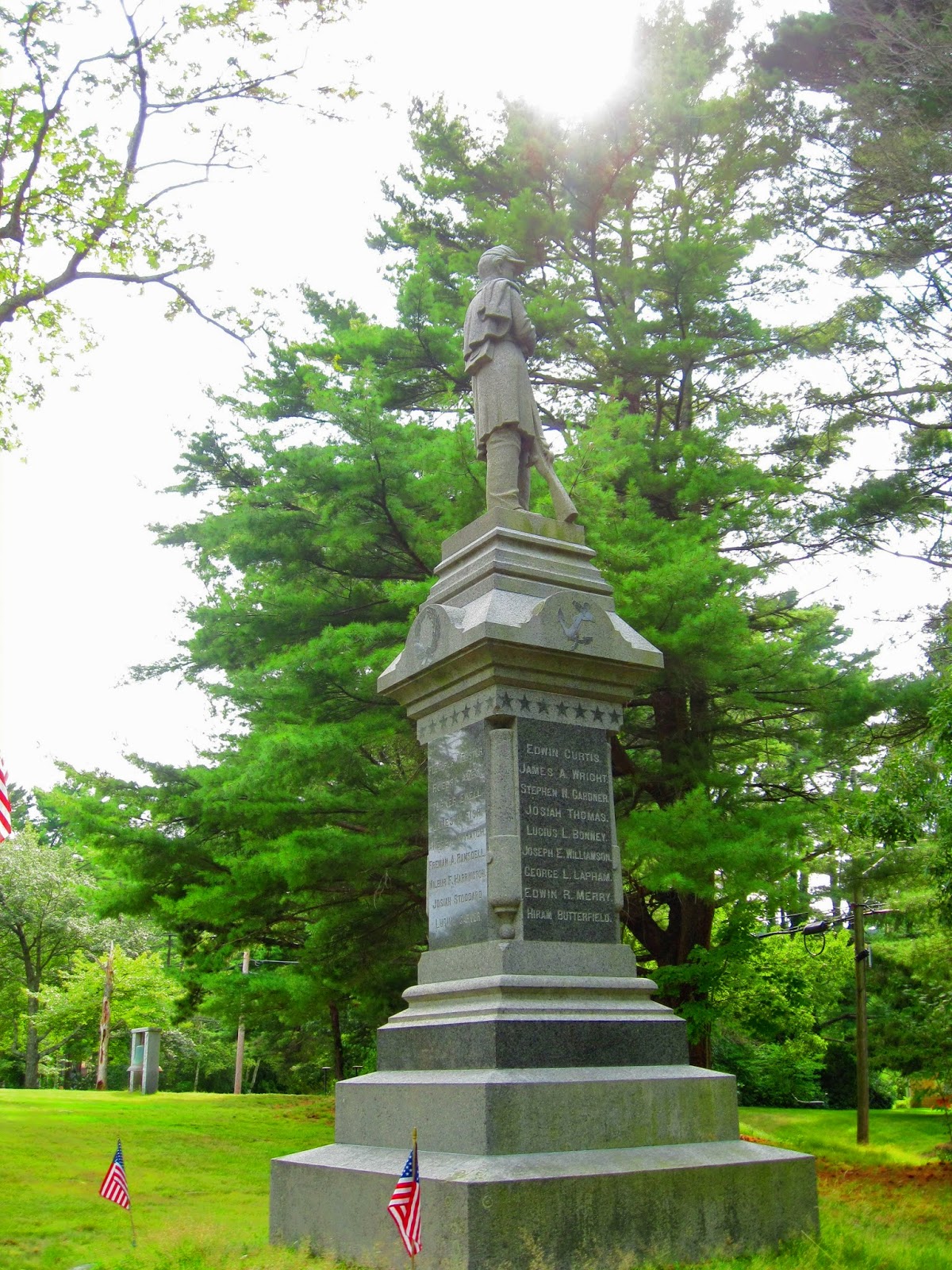 |
| Marshfield Hills Cemetery. Marshfield, Ma. |
The Civil War took a terrible toll on families on both sides, with most or
all of their male family members killed. Ray Nichols tells the story of
one such Southern family over at his Growing The Family Tree blog in
the post Civil War: the Richards family tragedy
 |
| Civil War Veterans' Plot, Mt.Vernon Cemetery, Abington, Ma. |
Amanda the Librarian of the ABT UNK blog is one of those who had
ancestors on both side of the conflict. Some survived, some didn't. You
can find their story and some pictures as well in Military Monday:
My Civil War Ancestors.
 |
| Mt. Pleasant Cemetery, Abington, Ma. |
After the war, monuments were built all over the country to honor those
who had fought and those who'd died in the war. Doreen from Ohio
of the Graveyard Rabbit of Sandusky Ohio shares photos of one in her
Civil War Soldiers and Sailors Monument in Milan, Ohio post.
 |
| Civil War Memorial Arch, Abington, Ma. |
The Fold3 website is a great place to find documents relating to the
wartime service of ancestors. John Newmark recently found one that
gave the reason his wife's ancestor joined the Confederate Army and
has published the transcript in Amanuensis Monday: Reasons for
taking up arms on his TransylvanianDutch blog.
 |
| Civil War Monument, Mayflower Cemetery, Duxbury, Ma. |
My 5x great grandmother Lydia Phelps was the young widow of a
Revolutionary War soldier with three small children when she
married my 5x great grandfather John Ames. One of the descendants
of her son Sampson Reid fought for the Union in the War and was one
of those awarded a high honor for his service. I wrote about it here
on West in New England in AXEL REED, CHICKAMAUGA &
CEMETERY RIDGE.
 |
| Lincoln Statue, Hingham, Ma. |
talented geneabloggers who took part this year, and urge my readers to leave
comments for them after you read their posts.
Next year will mark the fifth and final year of the Civil War 150th Anniversary
so if you haven't taken part in the Challenge yet, next year will be your last chance.
Or you can wait until 2036 when I run another Civil War Challenge to mark the
175th Anniversary!
Tuesday, August 05, 2014
AXEL REED, CHICKAMAUGA & CEMETERY RIDGE
I was contacted last week by a cousin about our mutual ancestor Lydia (Phelps)
Read West. While answering a question I was reminded of something I'd
discovered seven years ago when I first began this blog involving the Civil
War. I decided it was a better topic for the Civil War Challenge than the one
I'd originally intended, so I decided to write about it instead. And here we are.
My 5x great grandmother Lydia Phelps had married her first husband Sampson
Read on 18Mar 1773 in Westford, Ma. He joined the Continental Army in 1776
and died in 1777 at age 23. I haven't as yet been able to find out if he was killed
in battle or died of natural causes. He and Lydia had three children; a son, Sampson
Read, Jr. and two daughters, Lydia and Amy. Sometime between 1777 and 1779,
Lydia met and married my 5x great grandfather John Ames m a Revolutionary
War veteran and blacksmith. There would be seven Ames children, and the family
settled around Hartford, Oxford County, Me.
John Ames taught his step-son Sampson the blacksmith trade. Eventually the young
man married Jane Ellis. (she maybe a cousin through my Ellis line which I'll
have to research.) They had a large family of ten children, one of whom was Sampson
Read III. He in turn married Huldah Bisbee and had eight children. One of these
was Axel Hayford Reed. The youngest of the seven surviving children, he apparently
was not happy farming and when he reached adulthood he moved West, eventually
ending up in Glencoe, Minnesota where he was living when the Civil War broke out.
He enlisted in the Second Regiment of the Minnesota and became Sergeant of Company
K. Then in 1863 Axel got himself into trouble. In September of 1863 Axel's regiment
was part of Union General George Thomas' in the campaign along the Tennessee-Georgia
border. On 19Sep 1863 Axel Reed was under arrest at the reat of the lines when the
Battle of Chickamauga broke out. It seems he had written a letter to a newspaper that
had been critical of the food shortage of the army and was confined for it. When the
battle broke out, he either escaped or persuaded his guards to let him return to Company
K to fight with his men. The Second Minnesota helped stop a Confederate advance and
charges were dropped against Axel for his conduct on the field during the fighting.
Two months later Axel Reed was part of the Union advance up Missionary Ridge in
Tennessee on 25Nov 1863. During that he was wounded which caused his right arm to
be amputated. Despite losing his arm he stayed on with the 2nd Regiment and by the time
he was mustered out in July of 1865 he had risen to the rank of First Lieutenant.
After the war he returned home, raised a family, started a bank and farmed. A diary
he kept during the war is cited in several history books. He died in Glencoe, Minnesota
on 21January 1917.
For his actions at Chickamauga and at Missionary Ridge, my 2nd cousin 4x removed
Axel Hayford Reed was awarded the Congressional Medal of Honor. You can read the
official citation at the U.S. Army Center of Military History website, and more details
of the two battles where Axel distinguished himself at the website for the NationalMedal of Honor Museum of Military History, which includes his photograph.
Read West. While answering a question I was reminded of something I'd
discovered seven years ago when I first began this blog involving the Civil
War. I decided it was a better topic for the Civil War Challenge than the one
I'd originally intended, so I decided to write about it instead. And here we are.
My 5x great grandmother Lydia Phelps had married her first husband Sampson
Read on 18Mar 1773 in Westford, Ma. He joined the Continental Army in 1776
and died in 1777 at age 23. I haven't as yet been able to find out if he was killed
in battle or died of natural causes. He and Lydia had three children; a son, Sampson
Read, Jr. and two daughters, Lydia and Amy. Sometime between 1777 and 1779,
Lydia met and married my 5x great grandfather John Ames m a Revolutionary
War veteran and blacksmith. There would be seven Ames children, and the family
settled around Hartford, Oxford County, Me.
John Ames taught his step-son Sampson the blacksmith trade. Eventually the young
man married Jane Ellis. (she maybe a cousin through my Ellis line which I'll
have to research.) They had a large family of ten children, one of whom was Sampson
Read III. He in turn married Huldah Bisbee and had eight children. One of these
was Axel Hayford Reed. The youngest of the seven surviving children, he apparently
was not happy farming and when he reached adulthood he moved West, eventually
ending up in Glencoe, Minnesota where he was living when the Civil War broke out.
He enlisted in the Second Regiment of the Minnesota and became Sergeant of Company
K. Then in 1863 Axel got himself into trouble. In September of 1863 Axel's regiment
was part of Union General George Thomas' in the campaign along the Tennessee-Georgia
border. On 19Sep 1863 Axel Reed was under arrest at the reat of the lines when the
Battle of Chickamauga broke out. It seems he had written a letter to a newspaper that
had been critical of the food shortage of the army and was confined for it. When the
battle broke out, he either escaped or persuaded his guards to let him return to Company
K to fight with his men. The Second Minnesota helped stop a Confederate advance and
charges were dropped against Axel for his conduct on the field during the fighting.
Two months later Axel Reed was part of the Union advance up Missionary Ridge in
Tennessee on 25Nov 1863. During that he was wounded which caused his right arm to
be amputated. Despite losing his arm he stayed on with the 2nd Regiment and by the time
he was mustered out in July of 1865 he had risen to the rank of First Lieutenant.
After the war he returned home, raised a family, started a bank and farmed. A diary
he kept during the war is cited in several history books. He died in Glencoe, Minnesota
on 21January 1917.
For his actions at Chickamauga and at Missionary Ridge, my 2nd cousin 4x removed
Axel Hayford Reed was awarded the Congressional Medal of Honor. You can read the
official citation at the U.S. Army Center of Military History website, and more details
of the two battles where Axel distinguished himself at the website for the NationalMedal of Honor Museum of Military History, which includes his photograph.
Friday, July 18, 2014
A REMINDER: THE FOURTH AMERICAN CIVIL WAR BLOGPOST CHALLENGE DEADLINE
Just a reminder for the Fourth Annual American Civil War Blogpost
Challenge that the submission deadline is August 2nd to honor the Battle
of Mobile Bay, Alabama, that began on 2Aug, 1864.
These are some ideas you could write about:
Did you have ancestors in America during the Civil War? If so, where were they
and what were their circumstances? How did the Civil War affect them and
their family? Did the men enlist and did they perish in battle or die of illness?
On which side did they fight, or did you have relatives fighting on BOTH sides?
How did the women left at home cope, or did any of them find ways to help
the war effort? Were your ancestors living as slaves on Southern plantations
and if so when were they freed? Or were they freemen of color who enlisted
to fight?
Have you visited a Civil War battlefield or monument to those who fought?
It could be connected to your family history, or just one that you've visited
at some point.
If your ancestors had not emigrated to America as yet, what was their life
like around the time of the Civil War?
The 150 year celebration of the Civil War is a great source for those of us
blogging about our family history. So, let's do a little research over the coming
weeks between now and August 2nd. Find out the answers to the questions
I asked and write about them. Or if you think of another topic to do with your
family history and the Civil War, write about that. Send me the link when you
publish it on your blog and I'll post all the links here on August 15th.
Challenge that the submission deadline is August 2nd to honor the Battle
of Mobile Bay, Alabama, that began on 2Aug, 1864.
These are some ideas you could write about:
Did you have ancestors in America during the Civil War? If so, where were they
and what were their circumstances? How did the Civil War affect them and
their family? Did the men enlist and did they perish in battle or die of illness?
On which side did they fight, or did you have relatives fighting on BOTH sides?
How did the women left at home cope, or did any of them find ways to help
the war effort? Were your ancestors living as slaves on Southern plantations
and if so when were they freed? Or were they freemen of color who enlisted
to fight?
Have you visited a Civil War battlefield or monument to those who fought?
It could be connected to your family history, or just one that you've visited
at some point.
If your ancestors had not emigrated to America as yet, what was their life
like around the time of the Civil War?
The 150 year celebration of the Civil War is a great source for those of us
blogging about our family history. So, let's do a little research over the coming
weeks between now and August 2nd. Find out the answers to the questions
I asked and write about them. Or if you think of another topic to do with your
family history and the Civil War, write about that. Send me the link when you
publish it on your blog and I'll post all the links here on August 15th.
Saturday, April 26, 2014
THE FOURTH AMERICAN CIVIL WAR BLOGPOST CHALLENGE
It's time for this year's edition of the American Civil War Genealogy Blog
Challenge. This year, I've picked a submission deadline of August 2nd to
honor the Battle of Mobile Bay, Alabama, a naval campaign during which
David Farragut said "Damn the torpedoes, full speed ahead". It began on
2Aug, 1864.
This is how you can participate:
Did you have ancestors in America during the Civil War? If so, where were they
and what were their circumstances? How did the Civil War affect them and
their family? Did the men enlist and did they perish in battle or die of illness?
On which side did they fight, or did you have relatives fighting on BOTH sides?
How did the women left at home cope, or did any of them find ways to help
the war effort? Were your ancestors living as slaves on Southern plantations
and if so when were they freed? Or were they freemen of color who enlisted
to fight?
Have you visited a Civil War battlefield or monument to those who fought?
It could be connected to your family history, or just one that you've visited
at some point.
If your ancestors had not emigrated to America as yet, what was their life
like around the time of the Civil War?
The 150 year celebration of the Civil War is a great source for those of us
blogging about our family history. So, let's do a little research over the coming
weeks between now and August 2nd. Find out the answers to the questions
I asked and write about them. Or if you think of another topic to do with your
family history and the Civil War, write about that. Send me the link when you
publish it on your blog and I'll post all the links here on August 15th.
Challenge. This year, I've picked a submission deadline of August 2nd to
honor the Battle of Mobile Bay, Alabama, a naval campaign during which
David Farragut said "Damn the torpedoes, full speed ahead". It began on
2Aug, 1864.
This is how you can participate:
Did you have ancestors in America during the Civil War? If so, where were they
and what were their circumstances? How did the Civil War affect them and
their family? Did the men enlist and did they perish in battle or die of illness?
On which side did they fight, or did you have relatives fighting on BOTH sides?
How did the women left at home cope, or did any of them find ways to help
the war effort? Were your ancestors living as slaves on Southern plantations
and if so when were they freed? Or were they freemen of color who enlisted
to fight?
Have you visited a Civil War battlefield or monument to those who fought?
It could be connected to your family history, or just one that you've visited
at some point.
If your ancestors had not emigrated to America as yet, what was their life
like around the time of the Civil War?
The 150 year celebration of the Civil War is a great source for those of us
blogging about our family history. So, let's do a little research over the coming
weeks between now and August 2nd. Find out the answers to the questions
I asked and write about them. Or if you think of another topic to do with your
family history and the Civil War, write about that. Send me the link when you
publish it on your blog and I'll post all the links here on August 15th.
Monday, May 06, 2013
THE THIRD AMERICAN CIVIL WAR CHALLENGE BLOGPOSTS ROUNDUP
Welcome to the Third American Civil War Blog Challenge roundup. This year I decided
to post the Challenge entries today on May 6 in commemoration of the six day Battle of
Chancellorsville which concluded on 6May 1863. It was the second bloodiest battle of the
Civil War and was where Confederate General Stonewall Jackson was fatally wounded
by his own men.
These were the questions I posed in the Challenge:
"Did you have ancestors in America during the Civil War? If so, where were they
and what were their circumstances? How did the Civil War affect them and
their family? Did the men enlist and did they perish in battle or die of illness?
On which side did they fight, or did you have relatives fighting on BOTH sides?
How did the women left at home cope, or did any of them find ways to help
the war effort? Were your ancestors living as slaves on Southern plantations
and if so when were they freed? Or were they freemen of color who enlisted
to fight?"
There are nine blogposts this year but I think the quality makes up for the lack of
quantity. There are posts based on letters, eyewitness accounts, music, a diary, and
documents, and they cover events ranging from Gettysburg to El Paso. So sit down
with your beverage of choice, relax, and read!
 |
| Civil War Monument, Hobart Park, Whitman, Ma |
Sara Campbell says this about her post "My research goal is always to personalize the
individuals and gain an understanding of their lives beyond the bare dates and places found
in the records. After developing a profile of this family for a talk at the Chicopee Library
in commemoration of the 150th anniversary of the Civil War, I have 'adopted' them and
want to know more " You can read what Sara learned in her blogpost entitled
Civil War Research - Holyoke's Richard Wall at her Remembering Those Who came
Before blog.
Diane MacLean Boumenot recently discovered some fascinating letters written by
a relative who served in the Union Army . She shares them with us, along with the background
of the soldier and how the letters were preserved at her blog One Rhode Island Family.
The post is entitled The Civil War Letters of William Wilberforce Douglas .
Heather Wilkinson Rojo at Nutfield Genealogy had done many posts about her distant
relatives The Hutchinson Family Singers She says " As the first celebrity musical act in
American history, the Hutchinson Family Singers used their fame to advance progressive
causes. They sang about women’s suffrage, abolitionism, temperance, Native American
causes, and worker’s rights. They are most famous for their Civil War Era songs." You
can read the lyrics to some of the songs and learn more about the Hutchinsons in
Hutchinson Family Singers Civil War Song Lyrics
 |
| Civil War Monument, Marshfield Hills Cemetery, Marshfield, Ma. |
From A to Zophar is Wendy Grant Walter's blog devoted to her 2x great grandfather
Zophar Skinner. He was another soldier in the Union Army and kept a diary of his
experiences during the year 1863 which included being present at the Battle of Gettysburg.
You can read his entries for July 1st to July 5th 1863 and see pictures of Zophar and his
diary in Zophar Skinner and the 2nd RI Infantry at Gettysburg
LindaRe shares family stories and history from Copiah, Jefferson, and Lincoln Counties
in Mississippi at her Between the Gate Posts blog. Her contribution to the Challenge
deals with what happened during April 1863 when Union cavalry under the command of Col.
Benjamin Grierson came raiding through the area. The story is told through the eyewitness
accounts of the slaves working that day when they saw A Body of Cavalrymen Coming up the Road .
Like many of us Caroline Cohoe Shultz has some families and relatives that are hard nuts to
crack as far as information about them goes. Her 2x great granduncle Ralph Fielding was
one such person for Caroline. Then a record in Ancestry.com's lead her to a Civil War
Pension file, which not only yield answers about Ralph but provided more information
about the rest of his family, Follow Caroline's investigation. at her Calling all Cousins
blogpost, Third American Civil War Challenge - I Found Him! The Elusive Ralph Fielding!
It shows why pension files are a valuable resource for genealogists.
 |
| Civil War Memorial Bridge, Abington, Ma |
Over on her genealogy musings blog, Holly Timm takes a look at the whereabouts of her
family in the late great unpleasantness... It illustrates that while you may not have ancestors
who fought in some great battle, they still were effected someway or another by events that
happening hundreds of miles away from where they lived.
Carol A. Bowen Stevens' 2x great grandfather Peter Preston Holsinger was a Virginian and
a Confederate cavalryman who twice was captured in battle and sent to a prisoner of war
camp. Carol shares the details of Peter's experiences along with some documents she
found about them at her geneablog Reflections From the Fence. Read all about it in
Peter Preston Holsinger, Civil War Veteran, Third American Civil War Challenge
Finally, during my research on the family of my great grandmother Clara Ellingwood West
I've discovered a number of Ellingwood men who fought on the Union side during the War.
The most colorful story I've found so far is that of my distant cousin Ralph Everett Ellingwood
He was a farm-boy from Ohio who has seen more adventure by the time he was twenty-one
than most men see in an entire lifetime.
 |
| Inscription, Civil War Monument, Mayflower Cemetery, Duxbury, Ma. |
And that concludes this year's American Civil War Challenge. There will be two more
before the Challenge ends in April 2015 on the 150th anniversary of the War's conclusion.
So if you have any Civil War family stories to share, please blog about them and share them
with us next year in the next edition of the American Civil War Challenge!
Tuesday, April 30, 2013
RALPH EVERETT ELLINWOOD
The westward movement of some members of the Ellinwood?Ellenwood/Ellingwood
family began back in the early 18th century. While my 6x great grandfather Ebenezer
Ellinwood moved north to New Hampshire, his younger brother Thomas moved
westward to Brimfield, Massachusetts. Eventually,one of his descendants would
move even further west, first to Orange County, New York and then to Rock Creek,
Ohio.
My 4th cousin 4x removed Ralph Everett Ellinwood was born in New York on 28Apr 1838
before his parents moved on to Ohio. He was the eighth out of ten children(seven of
his eight sisters died before age 21)and on 21Sep 1858 he enlisted in the U.S.Army. It
must have been exciting for a twenty year old son of a farmer to be in Company I of the
Eighth Regiment, stationed in the Southwest in New Mexico and Texas. Ralph must
have been a good soldier because he had been promoted to Sergeant by Sept 1860.
He was in Texas when the Civil War broke out and he was taken prisoner by Rebel
forces, then sent to a prison camp on the Saladas River near San Antonio. It
seemed Ralph was out of the War, but he was a very determined young man.
He escaped.
I read about Ralph in Leonard Ellinwood's The Ellinwood (Ellenwood/Ellingwood)
Family 1635-1963 (1963) pp194-198. He simply says that Ralph made his escape
through West Texas to Mexico, then crossed over to Havana, Cuba where the U.S.Consul
arranged passage to New York City. Think about that: he'd just turned twenty-three
when he'd been imprisoned in April and then escaped. He'd already seen and done
more things than many men three times his age!
Ralph reached New York by October 1861 and reported to Fort Columbus on New
York Harbor and commissioned a second lieutenant in the 2nd Infantry. He joined
the Union Army in Virginia. In letters to his brother ohn, Ralph talks about nearly
being shot by a Rebel sniper just outside of Yorktown in April of 1862, and of some
grueling conditions during a march on Richmond in May. The Union Army was within
25 miles of the capital of Confederacy and Ralph was confident that the war would soon
be over. He writes of going to Mexico with his wife Eugenia after the war's end. By
July he's recovered from dysentery and been promoted to first lieutenant of Company
C.
Then on 30Aug 1862 the 2nd Infantry took part at the Second Battle of Bull Run. Ralph
was wounded in the right ankle and evemually was taken to an hopital at Alexandria, Va.
Although the wound hadn't seemed serious at first, it soon worsened. He died on 25Sep
1862. The term used for the cause of death on the Union Army record I found on Ancestry
was "vulnus sclopet", a shortening of "vulnus slopeticum", a fancy Latin term for "gunshot
wound". But what really killed him was infection and Ralph's own fear of amputation. A
fellow officer wrote to Ralph's brother John and told him that Ralph "had a horror of being
a cripple and often in conversation had expressed himself to this extent, that if he was
ever was wounded that death was preferable to being a cripple for life."
Ralph Everett Ellinwood died with the rank of Brevet Captain, a battlefield promotion
at Second Bull Run. He'd risen from the rank of private to captain in just four years from
his enlistment date.
He was just twenty four years old.
family began back in the early 18th century. While my 6x great grandfather Ebenezer
Ellinwood moved north to New Hampshire, his younger brother Thomas moved
westward to Brimfield, Massachusetts. Eventually,one of his descendants would
move even further west, first to Orange County, New York and then to Rock Creek,
Ohio.
My 4th cousin 4x removed Ralph Everett Ellinwood was born in New York on 28Apr 1838
before his parents moved on to Ohio. He was the eighth out of ten children(seven of
his eight sisters died before age 21)and on 21Sep 1858 he enlisted in the U.S.Army. It
must have been exciting for a twenty year old son of a farmer to be in Company I of the
Eighth Regiment, stationed in the Southwest in New Mexico and Texas. Ralph must
have been a good soldier because he had been promoted to Sergeant by Sept 1860.
He was in Texas when the Civil War broke out and he was taken prisoner by Rebel
forces, then sent to a prison camp on the Saladas River near San Antonio. It
seemed Ralph was out of the War, but he was a very determined young man.
He escaped.
I read about Ralph in Leonard Ellinwood's The Ellinwood (Ellenwood/Ellingwood)
Family 1635-1963 (1963) pp194-198. He simply says that Ralph made his escape
through West Texas to Mexico, then crossed over to Havana, Cuba where the U.S.Consul
arranged passage to New York City. Think about that: he'd just turned twenty-three
when he'd been imprisoned in April and then escaped. He'd already seen and done
more things than many men three times his age!
Ralph reached New York by October 1861 and reported to Fort Columbus on New
York Harbor and commissioned a second lieutenant in the 2nd Infantry. He joined
the Union Army in Virginia. In letters to his brother ohn, Ralph talks about nearly
being shot by a Rebel sniper just outside of Yorktown in April of 1862, and of some
grueling conditions during a march on Richmond in May. The Union Army was within
25 miles of the capital of Confederacy and Ralph was confident that the war would soon
be over. He writes of going to Mexico with his wife Eugenia after the war's end. By
July he's recovered from dysentery and been promoted to first lieutenant of Company
C.
Then on 30Aug 1862 the 2nd Infantry took part at the Second Battle of Bull Run. Ralph
was wounded in the right ankle and evemually was taken to an hopital at Alexandria, Va.
Although the wound hadn't seemed serious at first, it soon worsened. He died on 25Sep
1862. The term used for the cause of death on the Union Army record I found on Ancestry
was "vulnus sclopet", a shortening of "vulnus slopeticum", a fancy Latin term for "gunshot
wound". But what really killed him was infection and Ralph's own fear of amputation. A
fellow officer wrote to Ralph's brother John and told him that Ralph "had a horror of being
a cripple and often in conversation had expressed himself to this extent, that if he was
ever was wounded that death was preferable to being a cripple for life."
Ralph Everett Ellinwood died with the rank of Brevet Captain, a battlefield promotion
at Second Bull Run. He'd risen from the rank of private to captain in just four years from
his enlistment date.
He was just twenty four years old.
Tuesday, April 23, 2013
A REMINDER ABOUT THE THIRD AMERICAN CIVIL WAR CHALLENGE DEADLINE.
Just a reminder, there's only a week left to the deadline for submissions
to the Third American Civil War Challenge.
This is how you can participate:
Did you have ancestors in America during the Civil War? If so, where were they
and what were their circumstances? How did the Civil War affect them and
their family? Did the men enlist and did they perish in battle or die of illness?
On which side did they fight, or did you have relatives fighting on BOTH sides?
How did the women left at home cope, or did any of them find ways to help
the war effort? Were your ancestors living as slaves on Southern plantations
and if so when were they freed? Or were they freemen of color who enlisted
to fight?
If your ancestors had not emigrated to America as yet, what was their life
like around the time of the Civil War?
The 150 year celebration of the Civil War is a great source for those of us
blogging about our family history. So, let's do a little research over the coming
weeks between now and April 30th . Find out the answers to the questions
I asked and write about them. Or if you think of another topic to do with your
family history and the Civil War, write about that. Send me the link when you
publish it on your blog, and on May 6th I'll publish all the links here.
I'm looking forward to some interesting blogposts!
to the Third American Civil War Challenge.
This is how you can participate:
Did you have ancestors in America during the Civil War? If so, where were they
and what were their circumstances? How did the Civil War affect them and
their family? Did the men enlist and did they perish in battle or die of illness?
On which side did they fight, or did you have relatives fighting on BOTH sides?
How did the women left at home cope, or did any of them find ways to help
the war effort? Were your ancestors living as slaves on Southern plantations
and if so when were they freed? Or were they freemen of color who enlisted
to fight?
If your ancestors had not emigrated to America as yet, what was their life
like around the time of the Civil War?
The 150 year celebration of the Civil War is a great source for those of us
blogging about our family history. So, let's do a little research over the coming
weeks between now and April 30th . Find out the answers to the questions
I asked and write about them. Or if you think of another topic to do with your
family history and the Civil War, write about that. Send me the link when you
publish it on your blog, and on May 6th I'll publish all the links here.
I'm looking forward to some interesting blogposts!
Saturday, March 02, 2013
THE THIRD AMERICAN CIVIL WAR BLOG CHALLENGE
It's time for this year's edition of the American Civil War Genealogy Blog
Challenge. This year, I've picked a submission deadline and publication date
to honor the Battle of Chancellorsville, where Confederate General Stonewall
Jackson died. The Battle started on 30Apr 1863 and ended on 6May.
This is how you can participate:
Did you have ancestors in America during the Civil War? If so, where were they
and what were their circumstances? How did the Civil War affect them and
their family? Did the men enlist and did they perish in battle or die of illness?
On which side did they fight, or did you have relatives fighting on BOTH sides?
How did the women left at home cope, or did any of them find ways to help
the war effort? Were your ancestors living as slaves on Southern plantations
and if so when were they freed? Or were they freemen of color who enlisted
to fight?
If your ancestors had not emigrated to America as yet, what was their life
like around the time of the Civil War?
The 150 year celebration of the Civil War is a great source for those of us
blogging about our family history. So, let's do a little research over the coming
weeks between now and April 30th . Find out the answers to the questions
I asked and write about them. Or if you think of another topic to do with your
family history and the Civil War, write about that. Send me the link when you
publish it on your blog, and on May 6th I'll publish all the links here.
I'm looking forward to some interesting blogposts!
Challenge. This year, I've picked a submission deadline and publication date
to honor the Battle of Chancellorsville, where Confederate General Stonewall
Jackson died. The Battle started on 30Apr 1863 and ended on 6May.
This is how you can participate:
Did you have ancestors in America during the Civil War? If so, where were they
and what were their circumstances? How did the Civil War affect them and
their family? Did the men enlist and did they perish in battle or die of illness?
On which side did they fight, or did you have relatives fighting on BOTH sides?
How did the women left at home cope, or did any of them find ways to help
the war effort? Were your ancestors living as slaves on Southern plantations
and if so when were they freed? Or were they freemen of color who enlisted
to fight?
If your ancestors had not emigrated to America as yet, what was their life
like around the time of the Civil War?
The 150 year celebration of the Civil War is a great source for those of us
blogging about our family history. So, let's do a little research over the coming
weeks between now and April 30th . Find out the answers to the questions
I asked and write about them. Or if you think of another topic to do with your
family history and the Civil War, write about that. Send me the link when you
publish it on your blog, and on May 6th I'll publish all the links here.
I'm looking forward to some interesting blogposts!
Saturday, September 29, 2012
ABINGTON CIVIL WAR ENCAMPMENT, SEPTEMBER, 2012
This year here in Abington, Massachusetts we've been celebrating the town's 300th
anniversary. This happens to coincide with the 100th anniversary of the War
Memorial Bridge at Island Grove Park which commemorates Abington's Civil War
veterans. So the town marked the occasion this past weekend with a rededication
of the bridge and a Civil War encampment by re-enactors.
I missed the rededication ceremonies on Saturday because of a prior commitment
but walked down to on Sunday afternoon but by that time they were beginning the
process of breaking camp and brought in cars to load up their tents and gear. I was
struck by the incongruity of watching a lady in a 19th century dress loading up a
SUV and a merchant with goods packed in plastic tubs:


There was a fashion show going on at the other side of the Grove so there
weren't many people around at the time near the tents. I wandered around
and took some pictures.


The fashion show ended and people began drifting back to the camp:

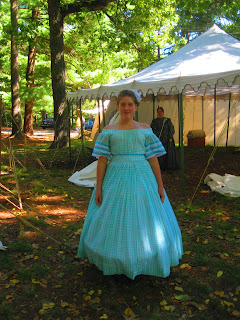


So while I didn't see any of the re-enactor soldiers what I saw gave me plenty
to think about as I headed home.
(For some great photos of the activities on Saturday, check out the gallery
here at the Quincy Patriot Ledger website.)
anniversary. This happens to coincide with the 100th anniversary of the War
Memorial Bridge at Island Grove Park which commemorates Abington's Civil War
veterans. So the town marked the occasion this past weekend with a rededication
of the bridge and a Civil War encampment by re-enactors.
I missed the rededication ceremonies on Saturday because of a prior commitment
but walked down to on Sunday afternoon but by that time they were beginning the
process of breaking camp and brought in cars to load up their tents and gear. I was
struck by the incongruity of watching a lady in a 19th century dress loading up a
SUV and a merchant with goods packed in plastic tubs:


There was a fashion show going on at the other side of the Grove so there
weren't many people around at the time near the tents. I wandered around
and took some pictures.

 |
| The Boston Sanitation Commission Tent |

 |
| I think this might have been an officer's tent. |
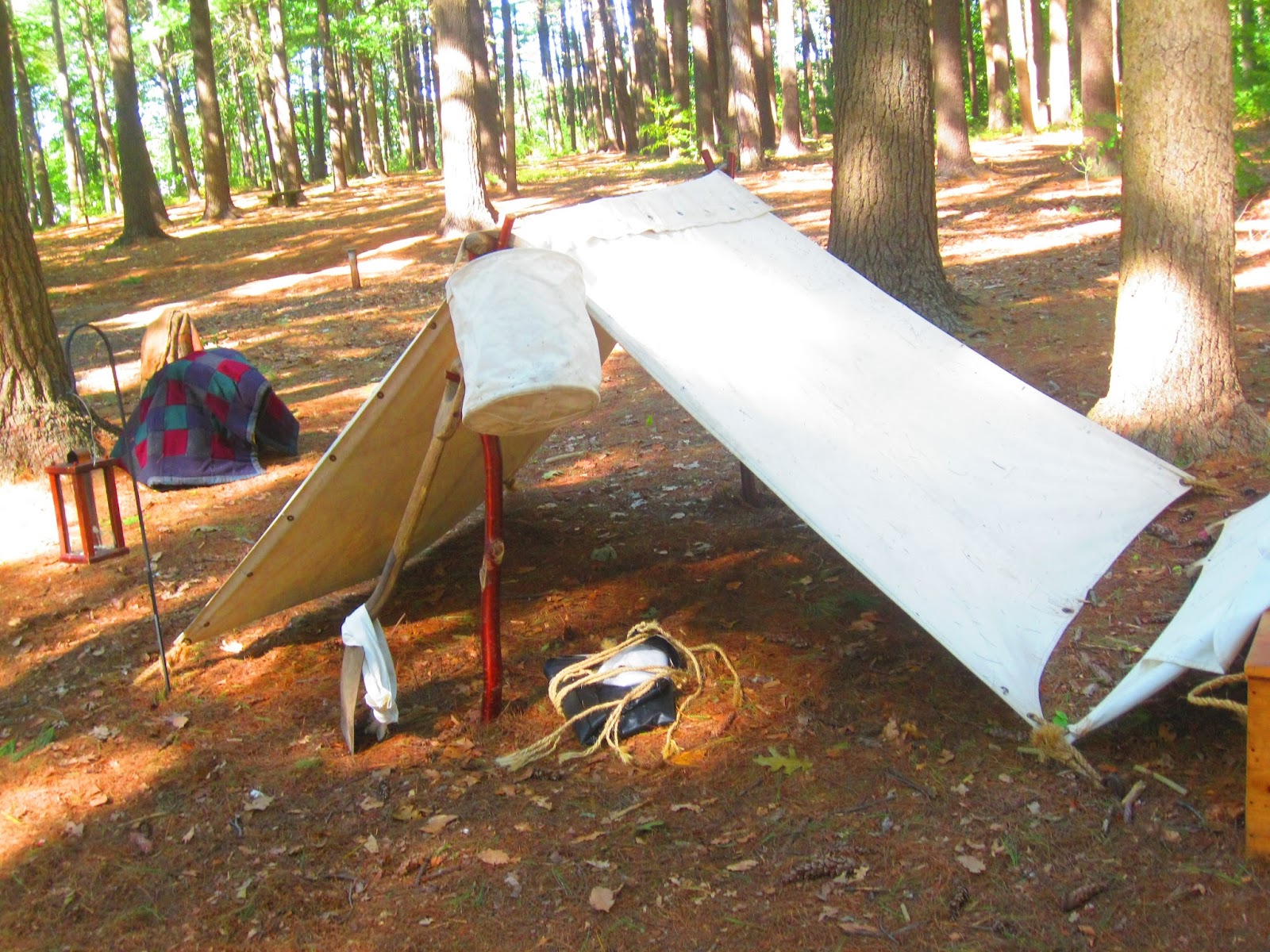 |
| My ancestor Asa Ellingwood may have slept in one like this. |

The fashion show ended and people began drifting back to the camp:


 |
| The tailor. |


So while I didn't see any of the re-enactor soldiers what I saw gave me plenty
to think about as I headed home.
(For some great photos of the activities on Saturday, check out the gallery
here at the Quincy Patriot Ledger website.)
Thursday, September 27, 2012
THE SECOND AMERICAN CIVIL WAR BLOG CHALLENGE BLOGPOSTS
Welcome to the Second American Civil War Blog Challenge! The rules
for the challenge were these:
"Did you have ancestors in America during the Civil War? If so, where were
they and what were their circumstances? How did the Civil War affect them
and their family? Did the men enlist and did they perish in battle or die of
illness? On which side did they fight, or did you have relatives fighting on
BOTH sides? How did the women left at home cope, or did any of them find
ways to help the war effort? Were your ancestors living as slaves on Southern
plantations and if so when were they freed, or were they freemen who
enlisted to fight? Did any ancestor take part in a battle that took place in
1862?
Write a blogpost on these questions, or, if you think of another topic to do
with your family history and the Civil War, write about that. Send me the link
after you publish it on your blog by midnight September 15th and I'll publish
all the links here ..."
Twelve bloggers(counting myself) submitted fourteen blogposts with stories
that explored their families and the Civil War from various angles. All are well
worth your attention, so let's get started!
Denise Spurlock's ancestor fought on both sides of the Civil War. She tells us
how in "Ambrose B. Martindale, Confederate Conscript, Union Volunteer" at
Denise's Life in the Past Lane blog.
There was a third approach a man could take to the Civil War and Jacob Snider of
Waynesboro, Pennsylvania took it. Ed Hamilton discusses the consequences in
"A Third Side in the American Civil War" at My Old Ohio Home.
In September of 1861 author Robert Burns Clark's 2x great grandfather and
great grandfather posed for a picture before they left to fight for the
Confederacy. Robert tells us what became of them, and what he sees when
he looks at that picture in "Marching Off To War".
Fellow Massachusetts genealogist Sara Campbell contributes two posts inspired
by her research from her Remembering Those Who Came Before Us blog.
The first, "See the World" is the story of a man who served in the Union
Navy across the ocean in Europe.
The second," Civil War Research - Holyoke's Richard Wall" concerns the history
of a family from Holyoke, Ma, that Sara has "adopted"
Thousands of Irish immigrants to America fought in the Civil War, some for the
Confederacy but most for the Union. Richard Billies' ancestor was one and Richard
writes about him in "Michael Patrick Murphy" at North Against South.
For some time now, TransylvanianDutch blogger John Newmark has been
transcribing records pertaining to the part his and his wife's ancestors played
during the War. He describes them and provides links to the transcriptions
with his "Second American Civil War Blog Challenge" post.
80,000 men from Maine served in the Civil War, including Pam Seavey Schaffner's
3x great grandfather and other members of his family. Pam writers about three
of them in "Oh Brave Brackley Boys of Freeman" at Digging Down East.
Like John Newmark, Dear Myrtle has written a number of posts over the years about
four Civil War ancestors. She gives a brief summary of those posts along with the
links at "2nd American Civil War Blog Challenge". (I found the first one about the
widow claiming a pension especially interesting!)
Holly Timm also contributed two posts. The first, "brother against brother ... "
describes the havoc the war brought to Harlan County, Kentucky.The other tells
about the roles three of Holly's relatives played at Gettysburg and asks the
question, "who were they ... ". You can find both posts at her genealogy musings
blog.
At Bits And Pieces Les Larrabee recounts the sad tale of one his wifes's relatives
in "Gideon Barnes Came Home to Die" and tells us how a fellow geneablogger
helped with his research!
Over at Genea-Musings, Randy Seaver uses information from a Civil War Pension
File and online sources to fill in the blanks in "Isaac Seaver - My Only Civil War Soldier"
Russ Worthington takes a different tack on the challenge at his Family Tree Maker
User blog and shows us how he used the FTM Timeline Feature to help research
his ancestor's Union Army service. Even if you don't use Family Tree Maker, check
out his "The 2nd Americal Civil War Blog Challenge - and FTM2012 Timelines ."
It might give you some ideas.
Finally, my own 2x great grandfather Asa Freeman Ellingwood returned to the
Union Army after having already served and been discharged for medical reasons.
Find out how in "ASA ELLINGWOOD IN THE VETERANS RESERVE CORPS" here
on West in New England.
That concludes this year's edition of the Civil War Challenge. My thanks to all
the bloggers who took part!
I'll be holding three more of these to coincide with the observance of the 150th
Anniversary of the War, so you all have advanced notice and hopefully find something
in your own family's experiences that you can write a post about for next year,
I look forward to reading it!
for the challenge were these:
"Did you have ancestors in America during the Civil War? If so, where were
they and what were their circumstances? How did the Civil War affect them
and their family? Did the men enlist and did they perish in battle or die of
illness? On which side did they fight, or did you have relatives fighting on
BOTH sides? How did the women left at home cope, or did any of them find
ways to help the war effort? Were your ancestors living as slaves on Southern
plantations and if so when were they freed, or were they freemen who
enlisted to fight? Did any ancestor take part in a battle that took place in
1862?
Write a blogpost on these questions, or, if you think of another topic to do
with your family history and the Civil War, write about that. Send me the link
after you publish it on your blog by midnight September 15th and I'll publish
all the links here ..."
Twelve bloggers(counting myself) submitted fourteen blogposts with stories
that explored their families and the Civil War from various angles. All are well
worth your attention, so let's get started!
Denise Spurlock's ancestor fought on both sides of the Civil War. She tells us
how in "Ambrose B. Martindale, Confederate Conscript, Union Volunteer" at
Denise's Life in the Past Lane blog.
There was a third approach a man could take to the Civil War and Jacob Snider of
Waynesboro, Pennsylvania took it. Ed Hamilton discusses the consequences in
"A Third Side in the American Civil War" at My Old Ohio Home.
In September of 1861 author Robert Burns Clark's 2x great grandfather and
great grandfather posed for a picture before they left to fight for the
Confederacy. Robert tells us what became of them, and what he sees when
he looks at that picture in "Marching Off To War".
Fellow Massachusetts genealogist Sara Campbell contributes two posts inspired
by her research from her Remembering Those Who Came Before Us blog.
The first, "See the World" is the story of a man who served in the Union
Navy across the ocean in Europe.
The second," Civil War Research - Holyoke's Richard Wall" concerns the history
of a family from Holyoke, Ma, that Sara has "adopted"
Thousands of Irish immigrants to America fought in the Civil War, some for the
Confederacy but most for the Union. Richard Billies' ancestor was one and Richard
writes about him in "Michael Patrick Murphy" at North Against South.
For some time now, TransylvanianDutch blogger John Newmark has been
transcribing records pertaining to the part his and his wife's ancestors played
during the War. He describes them and provides links to the transcriptions
with his "Second American Civil War Blog Challenge" post.
80,000 men from Maine served in the Civil War, including Pam Seavey Schaffner's
3x great grandfather and other members of his family. Pam writers about three
of them in "Oh Brave Brackley Boys of Freeman" at Digging Down East.
Like John Newmark, Dear Myrtle has written a number of posts over the years about
four Civil War ancestors. She gives a brief summary of those posts along with the
links at "2nd American Civil War Blog Challenge". (I found the first one about the
widow claiming a pension especially interesting!)
Holly Timm also contributed two posts. The first, "brother against brother ... "
describes the havoc the war brought to Harlan County, Kentucky.The other tells
about the roles three of Holly's relatives played at Gettysburg and asks the
question, "who were they ... ". You can find both posts at her genealogy musings
blog.
At Bits And Pieces Les Larrabee recounts the sad tale of one his wifes's relatives
in "Gideon Barnes Came Home to Die" and tells us how a fellow geneablogger
helped with his research!
Over at Genea-Musings, Randy Seaver uses information from a Civil War Pension
File and online sources to fill in the blanks in "Isaac Seaver - My Only Civil War Soldier"
Russ Worthington takes a different tack on the challenge at his Family Tree Maker
User blog and shows us how he used the FTM Timeline Feature to help research
his ancestor's Union Army service. Even if you don't use Family Tree Maker, check
out his "The 2nd Americal Civil War Blog Challenge - and FTM2012 Timelines ."
It might give you some ideas.
Finally, my own 2x great grandfather Asa Freeman Ellingwood returned to the
Union Army after having already served and been discharged for medical reasons.
Find out how in "ASA ELLINGWOOD IN THE VETERANS RESERVE CORPS" here
on West in New England.
That concludes this year's edition of the Civil War Challenge. My thanks to all
the bloggers who took part!
I'll be holding three more of these to coincide with the observance of the 150th
Anniversary of the War, so you all have advanced notice and hopefully find something
in your own family's experiences that you can write a post about for next year,
I look forward to reading it!
Saturday, September 15, 2012
ASA ELLINGWOOD IN THE VETERANS RESERVE CORPS
Last year I posted transcriptions of the Civil War Pension File of my 2x
great grandfather Asa F Ellingwood. Asa had enlisted in the 5th Maine
Volunteer Regiment in June, 1861 and had been present at the First
Battle of Bull Run. He was injured in the Union retreat with a hernia
when he was knocked over by the horse of a Union officer and then
developed nephritis after falling ill from the alternating heat and rain.
He was discharged with a Certificate of Disability on Dec 23 1861.
But not quite three years later he reenlisted by joining the Veterans
Reserve Corps as described in his Pension File:
"Asa Ellingwood. Reenlisted Sept 3" 1864
at West Lebanon N.H. in V.R.C. for 3 years
Muster Roll of Unassigned Det V.R.C.
(to which assigned) from Oct 31" 1864 to Apl
30" 1865 Present. Muster Roll of 243 Co 1" Batt
V.R.C. (to which transferred) June 26" 1865,
for May & June, 1865 Present same to Augt,
31" 1865. Muster Roll of Co A 9" V.R.C. (to which
transferred Sept 22" 1865) for Sept & Oct, 1865
Present. He was mustered out on Det M.O.R.
Nov. 16 " 1865 as Private at Washington, D.C.
by reason of G.O. No 155 A.G.O. Oct .26" 1865.
Disability at date of enlistment "Right
Inguinal Hernia"

The Veterans Reserve Corps was organized in April 1863 to have injured
or wounded soldiers perform duties that would free up able bodied soldiers
for the front lines, The Reserves were divided into two battalions: the First
Battalion, made up of men who were able to bear arms and serve as pickets,
sentries, and prison guards, and the Second, made up of more seriously
injured men who were able to perform as cooks and other light duty.
Asa seems to be the exception to the rule, because even though he was in
the First Battalion, he worked as a cook.
I can think of two reasons why this might have happened: first, the nature of
his disability. I won't go into the details of what a Inguinal Hernia is because it's
not for the squeamish, and, frankly, I'm squeamish. But obviously it was
serious enough to keep him from the usual assignments for members of the
First Battalion V.R.C.. The second reason might be that he'd might have had
experience in civilian life cooking at a lumber camp in Maine or over in
New Hampshire.
As a cook, Asa would have been assigned to some permanent
installation since troops in the field cooked their own meals from their
field rations. I haven't as yet discovered where he might have been
stationed when he was marked as "Present" in the Muster Rolls listed in
the above image. Perhaps the location of where he was mustered out is
a clue, Washington, D.C. There were a large number of V.R.C. troops on
duty in the capital and they would after all have to be fed. If that was the
case, Asa would have been there at the time of Lincoln's assassination and
the period after. He might have witnessed the execution of John Wilkes
Booth's co-conspirators in July of 1865 when members of the V.R.C. helped
with the hangings.
While I was learning all this I was brought back to the matter of the inquiry
into Asa's pension. He was given a medical discharge from his first period
in the Union Army with the 5th Maine. The procedure to enlist in the V.R.C.
required a medical examination to determine fitness for duty. So why the
hearing and questioning when he applied for an adjustment to the amount
of his pension? All I can think of is that there were a greater number of men
applying for pension money and some might have been "working the system".
The War Department would have become a bit more thorough in making
sure the disability claims were real.
But Asa Ellingwood did his duty twice, and returned home to his wife Florilla
and to the daughter Clara Ellingwood, my great grandmother, who had been
born while he was away.
great grandfather Asa F Ellingwood. Asa had enlisted in the 5th Maine
Volunteer Regiment in June, 1861 and had been present at the First
Battle of Bull Run. He was injured in the Union retreat with a hernia
when he was knocked over by the horse of a Union officer and then
developed nephritis after falling ill from the alternating heat and rain.
He was discharged with a Certificate of Disability on Dec 23 1861.
But not quite three years later he reenlisted by joining the Veterans
Reserve Corps as described in his Pension File:
"Asa Ellingwood. Reenlisted Sept 3" 1864
at West Lebanon N.H. in V.R.C. for 3 years
Muster Roll of Unassigned Det V.R.C.
(to which assigned) from Oct 31" 1864 to Apl
30" 1865 Present. Muster Roll of 243 Co 1" Batt
V.R.C. (to which transferred) June 26" 1865,
for May & June, 1865 Present same to Augt,
31" 1865. Muster Roll of Co A 9" V.R.C. (to which
transferred Sept 22" 1865) for Sept & Oct, 1865
Present. He was mustered out on Det M.O.R.
Nov. 16 " 1865 as Private at Washington, D.C.
by reason of G.O. No 155 A.G.O. Oct .26" 1865.
Disability at date of enlistment "Right
Inguinal Hernia"

The Veterans Reserve Corps was organized in April 1863 to have injured
or wounded soldiers perform duties that would free up able bodied soldiers
for the front lines, The Reserves were divided into two battalions: the First
Battalion, made up of men who were able to bear arms and serve as pickets,
sentries, and prison guards, and the Second, made up of more seriously
injured men who were able to perform as cooks and other light duty.
Asa seems to be the exception to the rule, because even though he was in
the First Battalion, he worked as a cook.
I can think of two reasons why this might have happened: first, the nature of
his disability. I won't go into the details of what a Inguinal Hernia is because it's
not for the squeamish, and, frankly, I'm squeamish. But obviously it was
serious enough to keep him from the usual assignments for members of the
First Battalion V.R.C.. The second reason might be that he'd might have had
experience in civilian life cooking at a lumber camp in Maine or over in
New Hampshire.
As a cook, Asa would have been assigned to some permanent
installation since troops in the field cooked their own meals from their
field rations. I haven't as yet discovered where he might have been
stationed when he was marked as "Present" in the Muster Rolls listed in
the above image. Perhaps the location of where he was mustered out is
a clue, Washington, D.C. There were a large number of V.R.C. troops on
duty in the capital and they would after all have to be fed. If that was the
case, Asa would have been there at the time of Lincoln's assassination and
the period after. He might have witnessed the execution of John Wilkes
Booth's co-conspirators in July of 1865 when members of the V.R.C. helped
with the hangings.
While I was learning all this I was brought back to the matter of the inquiry
into Asa's pension. He was given a medical discharge from his first period
in the Union Army with the 5th Maine. The procedure to enlist in the V.R.C.
required a medical examination to determine fitness for duty. So why the
hearing and questioning when he applied for an adjustment to the amount
of his pension? All I can think of is that there were a greater number of men
applying for pension money and some might have been "working the system".
The War Department would have become a bit more thorough in making
sure the disability claims were real.
But Asa Ellingwood did his duty twice, and returned home to his wife Florilla
and to the daughter Clara Ellingwood, my great grandmother, who had been
born while he was away.
Subscribe to:
Posts (Atom)